


A practical guide for importers of Italian food into the UK
A Parmigiano Reggiano shipment left its producer in Emilia-Romagna two days ago.
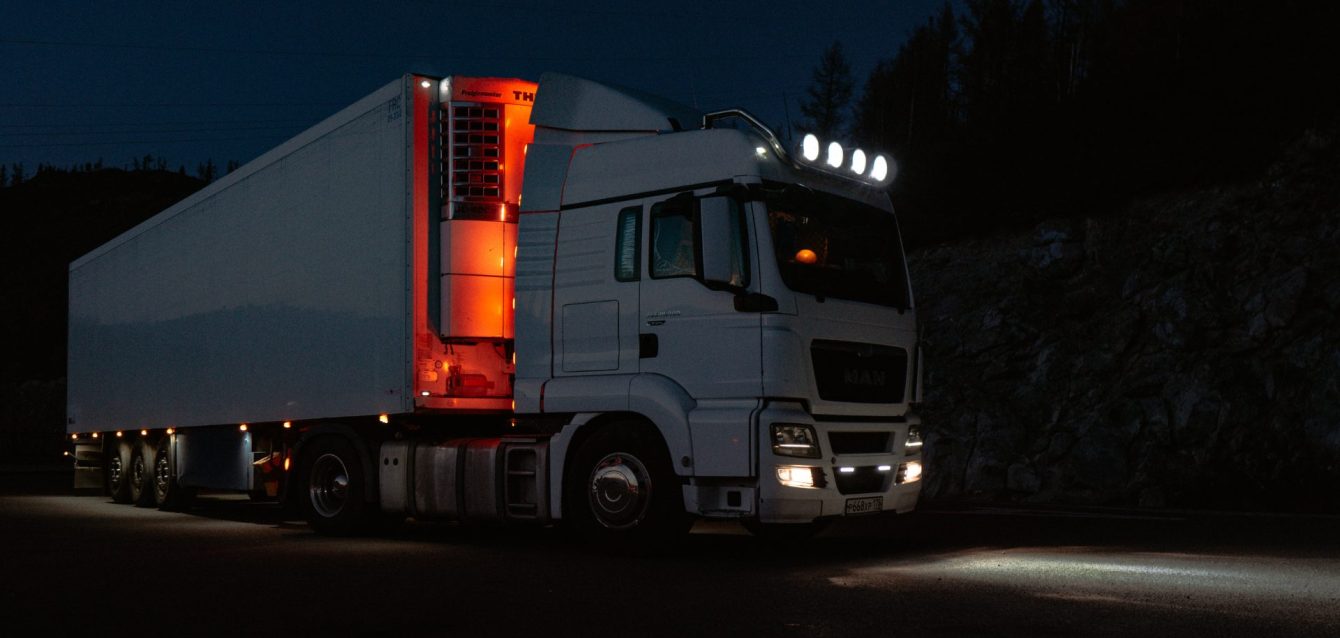
The lorry is approaching Folkestone. At this moment, one thing matters more than anything else: has the IPAFFS pre-notification been submitted, is it correct, and is it on time?
Under the UK’s Border Target Operating Model (BTOM), IPAFFS compliance is not a formality — it is the single most important documentary action that determines whether your Italian goods cross the border smoothly or end up on hold for inspection. An error in the commodity code or a weight discrepancy between the pre-notification and the health certificate can hold up a chilled shipment for hours.
This guide walks you through every step of the IPAFFS pre-notification process for Italian food, so your shipment reaches your customer without surprises.
What is IPAFFS and why does it matter?
IPAFFS — Import of Products, Animals, Food and Feed System — is the UK government’s mandatory pre-notification platform, administered by DEFRA. It replaced the EU’s TRACES system after Brexit and is now the only channel for notifying UK authorities of incoming shipments of food and animal-origin products subject to SPS controls.
When a notification is submitted, IPAFFS generates a Common Health Entry Document (CHED). This is the official compliance document used by Border Control Post (BCP) officers to plan and carry out checks. Without a correctly completed CHED, a shipment risks delays, additional physical inspections and, in the worst cases, refusal at the UK border.
In 2026, with BTOM fully implemented and heightened biosecurity monitoring across European corridors, the margin for error is narrower than ever. Even Italian shipments — which carry no inherent health risk — are subject to greater documentary scrutiny at Dover and Folkestone as part of broader SPS monitoring.
Does your Italian product require an IPAFFS pre-notification?
All Italian food products entering the United Kingdom require an IPAFFS pre-notification. What varies depending on product type is the level of controls and the documentation required.
Products are classified into three risk categories:
Low risk
Requires an IPAFFS pre-notification but does not require a veterinary health certificate. Border checks are primarily documentary; physical inspections are rare and triggered by random selection or specific intelligence.
Examples of low-risk Italian products: cheeses made from pasteurised milk (Parmigiano Reggiano, Grana Padano, Pecorino, mozzarella), butter, UHT milk, processed egg products, tinned fish products.
LSD (Lumpy Skin Disease) note: for dairy products made from pasteurised milk, UK authorities may request a signed declaration from the Italian producer confirming the minimum temperature and duration of the pasteurisation process. This is not a systematic requirement but should be prepared by the Italian supplier in advance of shipment.
Medium risk
Requires an IPAFFS pre-notification and a veterinary health certificate via TRACES. Products are subject to documentary, identity and periodic physical checks at a higher frequency than low-risk consignments.
Examples: cured meats and processed meat products (Prosciutto crudo, salame, mortadella), fresh or frozen fish, certain composite products containing animal-origin ingredients from third countries.
Please note: the export of dairy products made from raw milk to the United Kingdom is prohibited. Exception: aged cheeses, for which veterinary certificate model GBHC416 is required alongside a declaration of the heat treatment applied to the raw material.
High risk
Requires an IPAFFS pre-notification, a veterinary health certificate and mandatory checks on every consignment — including physical inspections and, in many cases, laboratory analysis prior to release.
Examples: live bivalve molluscs, raw poultry from certain countries, products from establishments with a history of non-compliance.
How to verify your product’s risk category: check the classification directly on the UK Trade Tariff and the BTOM risk matrix before the shipment leaves Italy. If in doubt, contact the Fresh Ways Logistics team before dispatch.
Step by step: how the IPAFFS pre-notification works
Step 1 — IPAFFS registration
The IPAFFS notification must be submitted by a UK-based entity — typically the UK importer or an authorised customs agent acting on their behalf.
If you work with Fresh Ways Logistics, we manage the IPAFFS notification directly on your behalf as part of our fully managed import service — with no need for you to register or intervene.
If you manage the notification independently, you will need an active IPAFFS account linked to a UK Government Gateway ID. Registration is via GOV.UK and may take several working days: register well in advance of your first shipment.
Step 2 — Gather all documentation before you begin
Do not start a notification without all supporting documents to hand. Every piece of data entered must match these documents exactly — discrepancies are the leading cause of holds at the border. You will need:
- Veterinary health certificate signed by the relevant Italian authority (AUVAC/ASL) — required for medium and high-risk products only
- Commercial invoice with exact product descriptions, weights and declared values
- Detailed packing list by pallet/package
- Transport details: carrier name, vehicle registration, seal number
- Estimated time of arrival (ETA) at the Border Control Post
- Cold chain documentation for chilled or frozen products
Step 3 — Create a new notification
Log into IPAFFS using your Government Gateway credentials. From the dashboard, select “Create a new notification” and choose the correct notification type:
- POAO for cheeses, cured meats, dairy products, eggs, honey and processed animal products
- HRFNAO for high-risk food or feed of non-animal origin or composite products
- Plants and plant products for fresh fruit and vegetables, seeds or plant material
Select Italy as the country of origin. If the goods have transited through another country, note this separately.
Step 4 — Enter shipment details
This is the most critical step. Enter:
- Commodity code: use the correct 8-digit (preferably 10-digit) UK Trade Tariff code for each product. Parmigiano Reggiano (0406 90 73) and Grana Padano (0406 90 79) have different codes — do not use generic cheese codes.
- Net and gross weight: these must be identical to the figures on the veterinary health certificate and the commercial invoice.
- Number of packages per pallet or carton as declared.
- Transport temperature: mandatory for chilled (+2°C to +8°C) and frozen (-18°C or below) products.
- Means of transport: road, with vehicle details.
Any discrepancy between the data entered and the veterinary health certificate will generate a documentary flag. BCP officers cross-reference these documents line by line.
Step 5 — Select the Border Control Post (BCP)
For Italian food arriving by road, the correct BCP is Sevington (Ashford) — not Dover Western Docks. Selecting the wrong BCP means the CHED will be assigned to a facility that will never see the lorry, resulting in an automatic hold.
If the point of entry changes after the notification has been submitted, it must be amended or resubmitted before the vehicle arrives.
Step 6 — Submit within the required timeframes
Deadlines are non-negotiable:
- Products of Animal Origin (POAO): at least one working day before arrival at the BCP. Note: “one working day” is not the same as 24 hours. If a shipment arrives on Monday morning, the deadline is Friday — not Sunday. For POAO, submitting 24–36 hours before the estimated arrival time is best practice, provided this falls on a working day.
- High-Risk Food and Feed Not of Animal Origin (HRFNAO): at least four hours before arrival at the BCP.
Step 7 — Share the CHED reference with the carrier
Once the CHED has been generated, share the reference number with the haulier immediately. The driver must have it with them at the border.
For temperature-controlled shipments, confirm that cold chain documentation (datalogger records) is accessible and consistent with the conditions declared in IPAFFS.
The most common IPAFFS errors — and how to avoid them
- Incorrect commodity code. Using a generic “cheese” code instead of the product-specific code. Every Italian PDO product often has its own code.
- Weight discrepancy. The net weight on IPAFFS differs by even a few kilograms from the veterinary health certificate. This immediately triggers a documentary flag.
- ETA not updated. The lorry is delayed but the notification has not been amended. The CHED window expires — the notification must be resubmitted.
- Wrong BCP selected. The shipment enters via Sevington but the notification was registered for a different BCP. Automatic hold, manual resolution required.
- Notification submitted after departure. The driver has left before the IPAFFS notification was submitted. Always wait for the signed veterinary health certificate before the shipment leaves Italy.
- Composite products registered only as POAO. A product containing both animal and plant-origin ingredients may require dual classification. If in doubt, contact Fresh Ways before dispatch.
What happens at the border after the notification is submitted
Once the CHED is active, BCP officers will assign one of three levels of control:
- Documentary check: on-screen verification of the health certificate, invoice and CHED data
- Identity check: physical verification that the shipment matches the documentation
- Physical check: full inspection including temperature measurement, sampling and, where required, laboratory analysis
The likelihood of a physical inspection has increased in 2026 due to heightened biosecurity monitoring across European corridors. Even a well-documented Italian shipment may be selected for a physical check. In that event, having access to a temperature-controlled customs facility close to the BCP is essential — goods must not wait on a stationary vehicle whilst checks are completed.
If a hold is issued, the logistics partner must be notified immediately to manage the administrative resolution and protect the cold chain.
IPAFFS pre-notification checklist
☐ Product risk category verified on the UK Trade Tariff and BTOM risk matrix
☐ Veterinary health certificate obtained, signed and consistent with the invoice — medium and high-risk products only
☐ LSD declaration from the producer prepared, where applicable for dairy products
☐ Commercial invoice and packing list consistent with the health certificate (weights, quantities, product descriptions)
☐ Correct UK Trade Tariff commodity code verified for each product line
☐ Correct BCP selected: Sevington IBF (GBSEV25)
☐ Notification submitted within required timeframes (one working day for POAO / four hours for HRFNAO)
☐ CHED reference number shared with the carrier
☐ Transport temperature declared and consistent with cold chain documentation
☐ ETA confirmed with the carrier — if it changes, notification updated accordingly
Need support with IPAFFS pre-notifications?
Managing IPAFFS notifications accurately, on every shipment, requires a combination of customs expertise and operational coordination with Italian suppliers. A single error at the wrong moment can hold a chilled shipment at the border long enough to compromise shelf life and damage the relationship with your customer.
At Fresh Ways Logistics, we manage IPAFFS pre-notifications directly on behalf of the UK importer, as part of a fully managed import service. We coordinate with Italian producers on health certificate timing, submit accurate notifications and handle any real-time queries at the BCP — with no need for the importer to intervene.