
In summary: Successfully managing Italian food logistics is not just about moving products from Italy to the UK. The real challenge begins once those products arrive, where storage, inventory management, order fulfilment and distribution determine whether the supply chain performs efficiently or becomes a source of delays, waste and hidden costs.
Many UK importers invest significant time and resources in organising food imports from Italy, ensuring customs documentation is correct and transport schedules are respected. Yet, once products cross the border, a different set of operational challenges emerges. How goods are received, stored, prepared and distributed often has a greater impact on customer satisfaction than the journey itself.
Why Logistics Doesn’t End at the Border
For many importers, the arrival of goods in the UK feels like the completion of the process. In reality, it is only the beginning of the domestic logistics journey.
Consider a UK importer receiving weekly deliveries of Italian cheese, cured meats or wine. The transport has been planned carefully, the customs clearance process runs smoothly and the shipment arrives on time. From an import perspective, everything appears successful.
However, several critical activities still need to happen:
- Goods must be received and checked.
- Product quality must be verified.
- Temperature-sensitive items require appropriate handling.
- Stock must be stored correctly.
- Orders need to be prepared accurately.
- Products must be distributed throughout the UK.
Any weakness in these stages can create operational inefficiencies, stock issues, delivery delays and customer complaints.
This is why importing food successfully is not only about getting products into the UK. It’s about managing everything that happens afterwards.
Step One: Receiving and Checking Imported Goods
The first stage after arrival is often one of the most underestimated.
When imported products reach a warehouse, the receiving process should go beyond simply unloading pallets. A thorough inspection helps identify issues before they spread throughout the supply chain.
Typical checks include:
- Verifying product integrity.
- Inspecting packaging conditions.
- Confirming quantities received.
- Recording batch and lot numbers.
- Checking product temperatures.
- Reviewing accompanying documentation.
For example, if a pallet of refrigerated dairy products arrives with damaged packaging or incorrect temperature readings, identifying the issue immediately can prevent affected stock from entering circulation.
Likewise, accurate batch registration plays an important role in traceability. Should a quality issue arise later, businesses can respond more effectively by identifying where specific products have been stored or distributed.
Errors made during receiving often become larger problems further downstream. A stock discrepancy recorded incorrectly today may generate inventory shortages, order fulfilment problems and customer service issues weeks later.
For this reason, receiving procedures should be viewed as a key part of the broader UK food supply chain, not simply a warehouse task.
Step Two: Storing Products in the Right Conditions
Once products have been checked, the next challenge is ensuring they remain in optimal condition until they are required.
This is particularly important for temperature-sensitive products arriving from Italy, including:
- Fresh dairy products.
- Meat and charcuterie.
- Ready meals.
- Refrigerated ingredients.
- Specialty food items.
Maintaining product quality depends on using appropriate temperature-controlled storage and preserving the integrity of the cold chain at every stage.
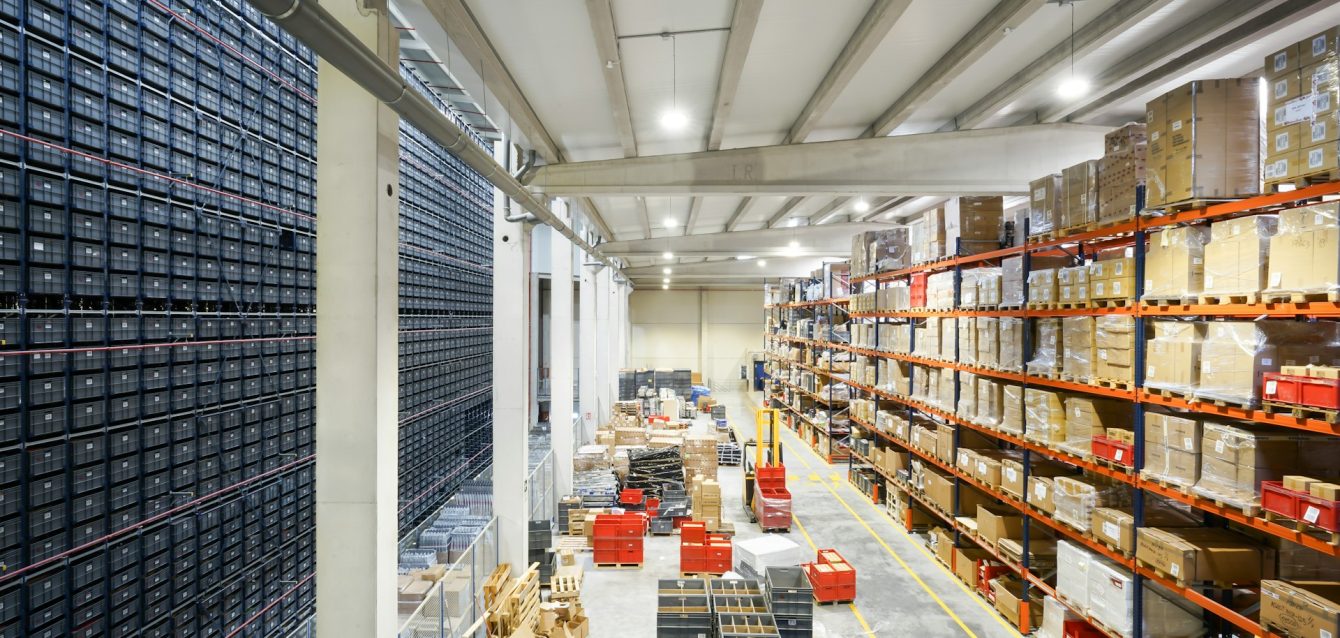
A warehouse is not simply a place to store stock.
It plays a strategic role in inventory availability, product protection and supply chain continuity.
Effective cold storage UK operations typically focus on:
- Temperature consistency.
- Stock rotation.
- Space optimisation.
- Inventory visibility.
- Rapid product access.
For many importers, demand can fluctuate significantly throughout the year. Seasonal peaks, promotional activity or unexpected customer orders require stock to remain immediately available without compromising product quality.
This is where cold storage solutions, temperature-controlled storage and refrigerated warehousing become operational assets rather than simple storage facilities.
A well-managed storage environment helps businesses reduce waste, improve stock accuracy and respond more effectively to customer requirements.
Step Three: Preparing Orders Efficiently
Once products are safely stored, attention shifts to order fulfilment.
Order preparation has a direct impact on both operational efficiency and customer satisfaction. Yet it is often one of the areas where hidden costs emerge.
The process generally includes:
- Inventory allocation.
- Picking activities.
- Pallet preparation.
- Shipment consolidation.
- Labelling and documentation.
- Dispatch planning.
When these activities are not coordinated efficiently, problems can arise quickly.
Common consequences include:
- Incorrect shipments.
- Delivery delays.
- Additional transport costs.
- Increased returns.
- Lower customer satisfaction.
Imagine a wholesaler supplying Italian food products to restaurants across multiple UK regions.
An incorrectly prepared order may require urgent re-delivery, generate additional transport costs and disrupt service for the final customer. The financial impact often extends well beyond the value of the original order.
Effective food fulfilment, accurate order preparation and structured inventory management help reduce these risks while creating a more reliable operation.
The objective is simple: ensuring the right products leave the warehouse in the correct quantities and at the planned time.
Step Four: National Distribution Across the UK
The final stage is delivering products to customers throughout the UK.
This phase often determines how the entire logistics process is perceived.
Regardless of how efficiently products were imported, stored and prepared, customers ultimately evaluate performance based on the final delivery experience.
Key priorities include:
- Delivery punctuality.
- Product condition upon arrival.
- Communication and coordination.
- Temperature control throughout transport.
- Reliable scheduling.
This is especially important when dealing with refrigerated goods.
Maintaining quality during domestic distribution requires effective temperature-controlled logistics and reliable refrigerated transport services capable of preserving product integrity until delivery.
For example, an importer supplying regional distributors may need shipments delivered across multiple locations with different schedules and handling requirements.
Successful execution depends on close coordination between warehouse operations and transportation teams.
The stronger this coordination, the more resilient the overall food distribution UK network becomes.
Ultimately, customers do not distinguish between storage providers, transport operators or warehouse teams. From their perspective, the supply chain is a single experience.
The Value of an Integrated Logistics Approach
As supply chains become more complex, many importers discover that managing logistics functions separately creates additional challenges.
When transportation, storage, order preparation and distribution operate independently, businesses often face:
- Reduced visibility.
- Communication gaps.
- Duplicate processes.
- Increased administrative workload.
- Higher risk of errors.
Each handover introduces another opportunity for information loss or operational inefficiency.
By contrast, an integrated logistics approach helps connect the various stages of the process into a more cohesive system.
This does not necessarily mean simplifying operations. Rather, it means improving coordination between:
- Product transport from Italy.
- Customs and compliance activities.
- Warehouse receipt and inspection.
- Storage management.
- Order fulfilment.
- Domestic distribution.
For example, visibility across inventory levels, warehouse capacity and transport schedules allows businesses to make faster operational decisions and respond more effectively to demand fluctuations.
Importers working with multiple product categories such as wine, dairy products, ambient foods and chilled goods can benefit particularly from this approach because different products often require different handling procedures.
Integrated logistics also helps reduce the hidden costs associated with fragmented operations, including unnecessary stock movements, duplicated administration and avoidable transport inefficiencies.
Similarly, effective customs support, robust storage management and coordinated food distribution services contribute to a smoother supply chain long after customs clearance has been completed.
The objective is not simply moving products from one location to another.
The objective is maintaining product availability, protecting quality and delivering consistent service levels from arrival through to final delivery.
Conclusion
For many UK importers, the journey from Italy to the UK is only half the story.
The real challenge lies in managing products efficiently after arrival, ensuring that quality, availability and service levels remain consistent right through to the final customer.
Receiving goods correctly, maintaining proper storage conditions, preparing orders accurately and coordinating national distribution are all essential components of effective Italian food logistics.
When these activities work together, businesses gain greater control over inventory, reduce operational complexity and strengthen the reliability of their supply chain.
Whether you’re importing wine, dairy products, ambient foods or refrigerated goods from Italy, planning what happens after arrival can be just as important as organising the journey itself.
Learn more about integrated logistics solutions for imported food products in the UK.